


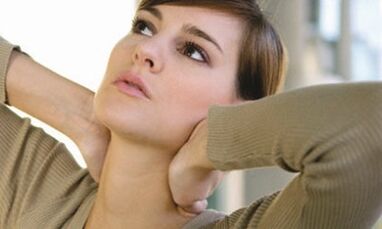
Osteochondrosis is a pathological process that leads to malnutrition and structural derangement, first of all the intervertebral discs, then the vertebrae themselves, spinal nerves, nearby muscles, ligaments, blood vessels and internal organs.
It can affect all parts of the spine—cervical, thoracic, lumbar, and sacral.Cervical osteochondrosis is a very common phenomenon, and its incidence is second only to lumbar osteochondrosis.
Cervical osteochondrosis occurs in stages.Like any other pathology, it will progress without proper and timely treatment.Functional and structural changes in bone and cartilage tissue become increasingly apparent, leading to complex forms of the disease with loss of sensitivity and limited movement.
stage and degree
There are 4 stages (degrees) of cervical osteochondrosis.At the same time, the concepts of "degree" and "stage" are often confused.Although they have roughly the same meaning, they are not exactly the same.This stage reflects structural abnormalities in the cervical spine, nearby organs, and tissues.By degree we mean the symptoms of osteochondrosis and the patient’s chief complaints.Clinical symptoms of grade 1 cervical osteochondrosis are mild and may even disappear completely.The patient complained of mild pain in the neck (neck pain) that worsened when turning his head.On examination, localized tension in the neck muscles was found.
Second-degree cervical osteochondrosis associated with discogenic radiculitis.The height of the spaces between the cervical vertebrae decreases due to further degenerative dystrophic changes in the disc core and fibrous capsule.As a result, the roots of the cervical nerves become compressed.Patients are bothered by spotting pain that worsens when turning and tilting the head.The pain syndrome can extend beyond the neck and be associated with generalized weakness and decreased performance.
Disc herniation forms in the cervical region due to further pathological processes leading to disc displacement and destruction.Increased pain and generalized weakness are accompanied by sensory and motor impairment in the affected areas.Third-degree cervical osteochondrosis occurs.
Subsequently, in grade 4 cervical osteochondrosis, the destroyed disc is replaced by fibrous connective tissue.Due to the involvement of the vertebral artery in the pathological process, pain syndromes with sensory and motor impairments are also accompanied by brain disorders - dizziness, lack of coordination, a sense of tinnitus.
etiology
Before talking about the causes or etiological factors of cervical osteochondrosis, it is necessary to clarify some anatomical and physiological characteristics of this part of the spine.
These features are as follows:
- The neck is a movable structure, but it borders the thoracic spine, which is relatively stationary.
- There are 7 cervical vertebrae with 8 sections.The "extra" part occurs due to the atlanto-occipital joint.
- The cervical vertebrae have an anatomically distinct structure, which is particularly evident in the case of the first two cervical vertebrae (atlas and axis).
- Vital communications pass through the neck—the trachea, esophagus, and large blood vessels, including the vertebral arteries, which supply blood to the brain.
The causes of cervical spine lesions and subsequent transformation into secondary cervical osteochondrosis are as follows:
- sedentary lifestyle;
- Malnutrition, lack of trace elements and vitamins;
- Poor posture continues among schoolchildren, students and office workers;
- Frequent hypothermia and unfavorable microclimate in homes and workplaces;
- Endocrine disorders;
- Weak immunity;
- genetics.
symptom
Symptoms of grade 2 cervical osteochondrosis, in addition to pain, include neck and back muscle tension.Neck pain (neck pain) from this degree of osteochondrosis can be spotty or diffuse pain that spreads from the neck to other anatomical areas – the back and shoulder girdle.As the intervertebral space shortens, muscles and ligaments sag.The muscular framework weakens, creating a cervical subluxation that causes the disc to shift to one side or the other.The pain can be sharp and severe, like lower back pain after turning your head or straightening your neck.
As already mentioned, in addition to pain, there is also tension in the neck and back muscles.Because the cervical spine is displaced not from the back but from the side, this tension is often asymmetrical and leads to poor posture.In turn, poor posture can lead to further deterioration of metabolic processes in the neck.All conditions are created for the transition of osteochondrosis to the third stage.
In the second stage of cervical osteochondrosis, the vertebral arteries have not yet been affected.However, at this stage, in addition to pain and muscle tension, patients complain of feelings of weakness, fatigue, and weakness.Pain may cause sleep disturbance.
treatment type
Treatment for grade 2 cervical osteochondrosis includes:
- drug treatment,
- physical therapy procedures,
- therapeutic gymnastics,
- massage,
- Manual therapy.
drug treatmentDesigned to eliminate neck pain, inflammation at the base of the cervical segments and normalize the metabolic processes of the cervical discs.Relieve pain with oral painkillers.But this is the least effective way to eliminate pain.In this regard, intramuscular injection is more effective.For severe pain, you can wear a special Shants collar around your neck.
relieve painThis can be achieved by eliminating the inflammatory process at the base of the cervix.In this regard, nonsteroidal anti-inflammatory drugs (NSAIDs) are used in various dosage forms - tablets, ointments, injections and compresses.Injections and ointments are very effective for this.Steroid hormones have good anti-inflammatory effects.
To restore damaged cartilage, oral chondroprotectants are recommended.For the same purpose, it is recommended to take a vitamin-mineral complex containing vitamins B, C, E as well as zinc, iron and calcium.Although brain disease does not occur in stage 2 of cervical osteochondrosis, the use of neuroprotective agents cannot go amiss.
physical therapy proceduresFor any degree of cervical osteochondrosis, they are designed to reduce pain and inflammation and improve local blood flow.Phonophoresis, laser and magnetic resonance therapy, and ultrasound therapy are used for this purpose.Physical therapy is contraindicated during exacerbation of osteochondrosis.
massageIn osteochondrosis, it is also performed between attacks.The massage session is performed with the patient sitting or lying on their side.At the same time, the masseur kneads, strokes, and kneads the tense muscles in smooth movements from the back of the head to the neck.Afterwards, massage the muscles of your back, neck and chest.In this case, a Kuznetsov applicator can be used for self-massage.It is a roller pin with plastic spikes.It is enough to place this roller on your neck for half an hour to an hour every day and you will get results soon.
therapeutic exerciseAimed to consolidate the effect of the above method in treating cervical osteochondrosis.This creates optimal loading for each muscle group, thereby increasing muscle strength and spinal traction.Manual treatment of cervical osteochondrosis should be performed with great caution.Due to the higher risk of cervical spine injury, it poses a great risk not only to the patient's health, but also to the patient's life.
Precautions
Prevention of cervical osteochondrosis aims at eliminating the causes of the disease and preventing the transition from the second to the third stage.
For this, the following requirements must be met:
- active lifestyle;
- good nutrition;
- Normal conditions in the home and workplace, excluding drafts and hypothermia;
- Correct posture when working and studying while "sitting for a long time";
- Exercise and participate in sports;
- Treat accompanying chronic conditions;
- At the first sign of osteochondrosis, see your doctor promptly.